A self-hosted control room + MCP server for everyone running multiple websites: uptime, SSL, incidents, costs and revenue in one place — with an AI that can read (and act on) all of it.
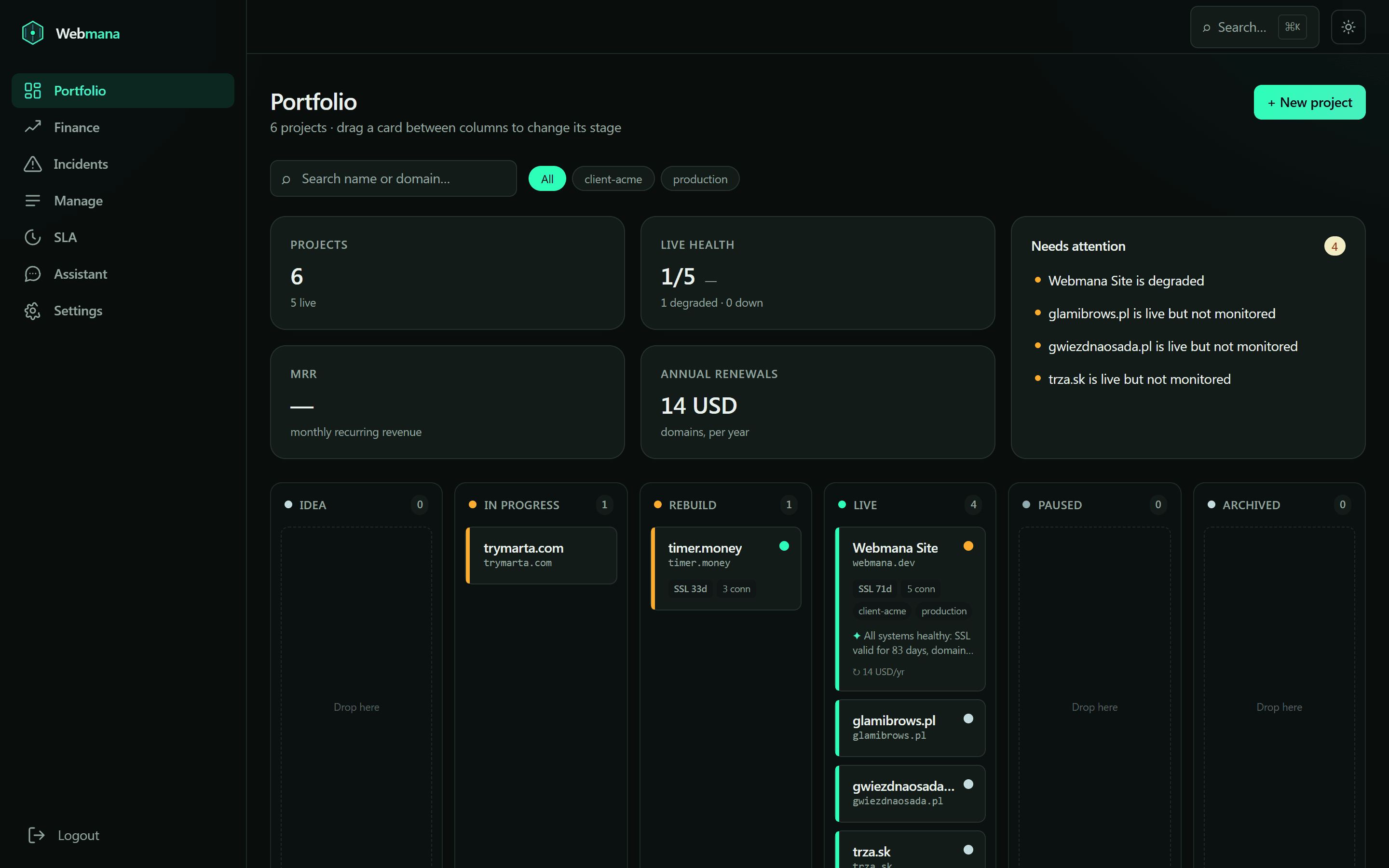
The real product on real domains — a kanban of your whole portfolio, with a “needs attention” queue rolled up from every connector.
localhost:3000
localhost:3000
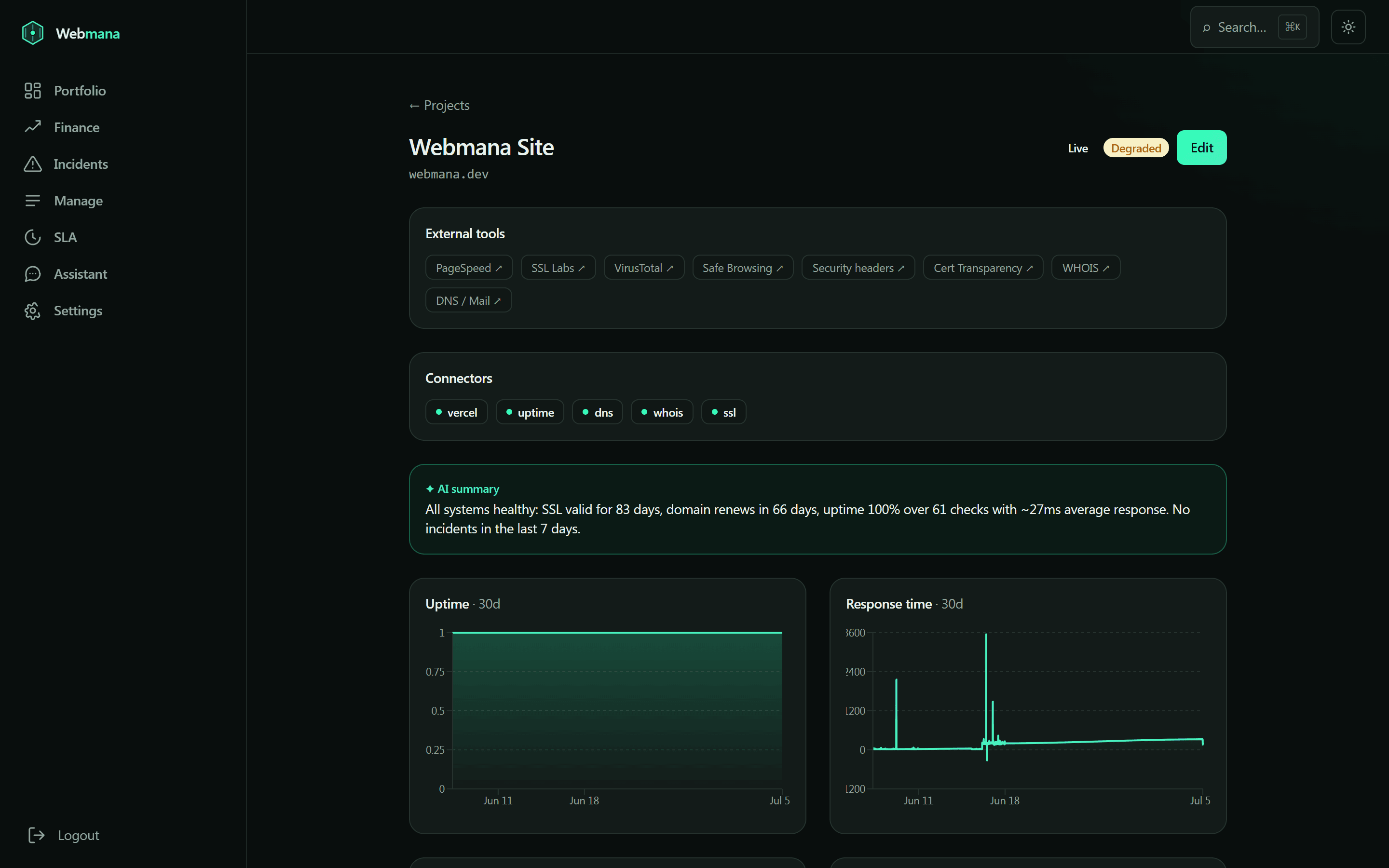
Per-project drill-down. 30-day charts for uptime, response time, SSL and DNS — plus an AI-written health summary and one-click external tools.
localhost:3000
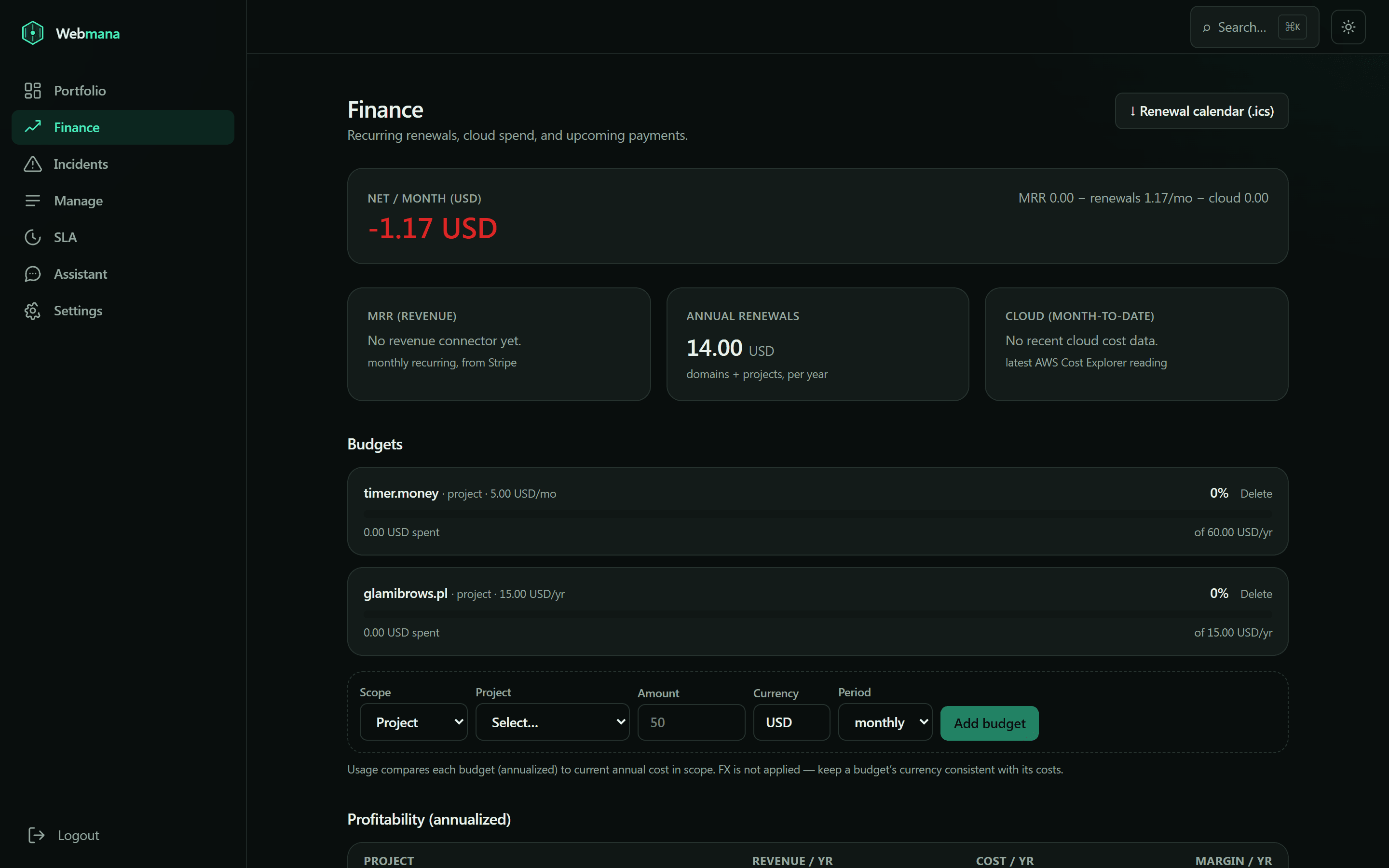
FinOps built in. Net per month, budgets with overspend bars, per-project profitability, and an exportable renewal calendar.
Stop living in fifteen browser tabs.
Cloudflare here, Google Analytics there, an uptime monitor in another tab, an SSL checker bookmarked somewhere. Running many domains means stitching the picture together by hand, every time.
Webmana polls each source on a schedule, normalizes the data, and stores it — so the dashboard and your AI always answer instantly, without hammering third-party APIs.
CloudflareAnalyticsUptimeSSLWHOISPageSpeedCosts→ One pane of glass
Everything in one view
Purpose-built for solo founders running a portfolio of sites.
Portfolio board
A kanban of every project by lifecycle stage — idea, in progress, live, archived. Monitoring kicks in once a project goes live.
Domain tracking
Registrar, expiry, auto-renew, and nameservers as first-class data — with renewal alerts at 60, 30, and 7 days.
Incidents & maintenance
Open → acknowledge → resolve lifecycle with time-based escalation, plus maintenance windows that silence alerts during planned work.
Budgets & profitability
MRR vs. cost per project, budget bars that go amber before they go red, and multi-currency normalization.
Uptime & SLA
Track availability and response times across all your sites over time.
SSL · WHOIS · DNS
Certificate expiry, registration, and DNS checks — no API keys required.
Performance
Core Web Vitals and PageSpeed scores pulled in and trended automatically.
Security posture
Headers and exposure checks surface misconfigurations before they bite.
FinOps
Annual renewal totals, cloud month-to-date spend, and a full cost breakdown per currency.
Alerting & routing
Threshold rules delivered over webhook, Slack, or email — routed per channel by minimum severity and project tag.
Teams, RBAC & audit
Admin / editor / viewer roles, email invites, REST API keys, and an audit log of every change.
AI assistant & insights
Chat with your portfolio, get scheduled health summaries and a weekly digest — via any Anthropic- or OpenAI-compatible model.
Built-in MCP server
Plug your AI into your infrastructure.
Webmana ships a Model Context Protocol server over both stdio and HTTP/SSE. Point Cursor, Claude, or any MCP client at it and let your AI read the live state of every project — and even run granted connector actions — all scoped to your RBAC roles and captured in the audit log.
Copy .env.example and drop in your secrets. They're encrypted at rest.
cp .env.example .env
3
Bring it up
One command boots Postgres, Redis, the API, worker, MCP server, and UI.
docker compose up
Open source, by design.
The application is licensed AGPL-3.0 so improvements flow back to the community. The connector SDK is Apache-2.0 so you can build and ship your own integrations freely. Contributions are welcome under a simple DCO sign-off.